
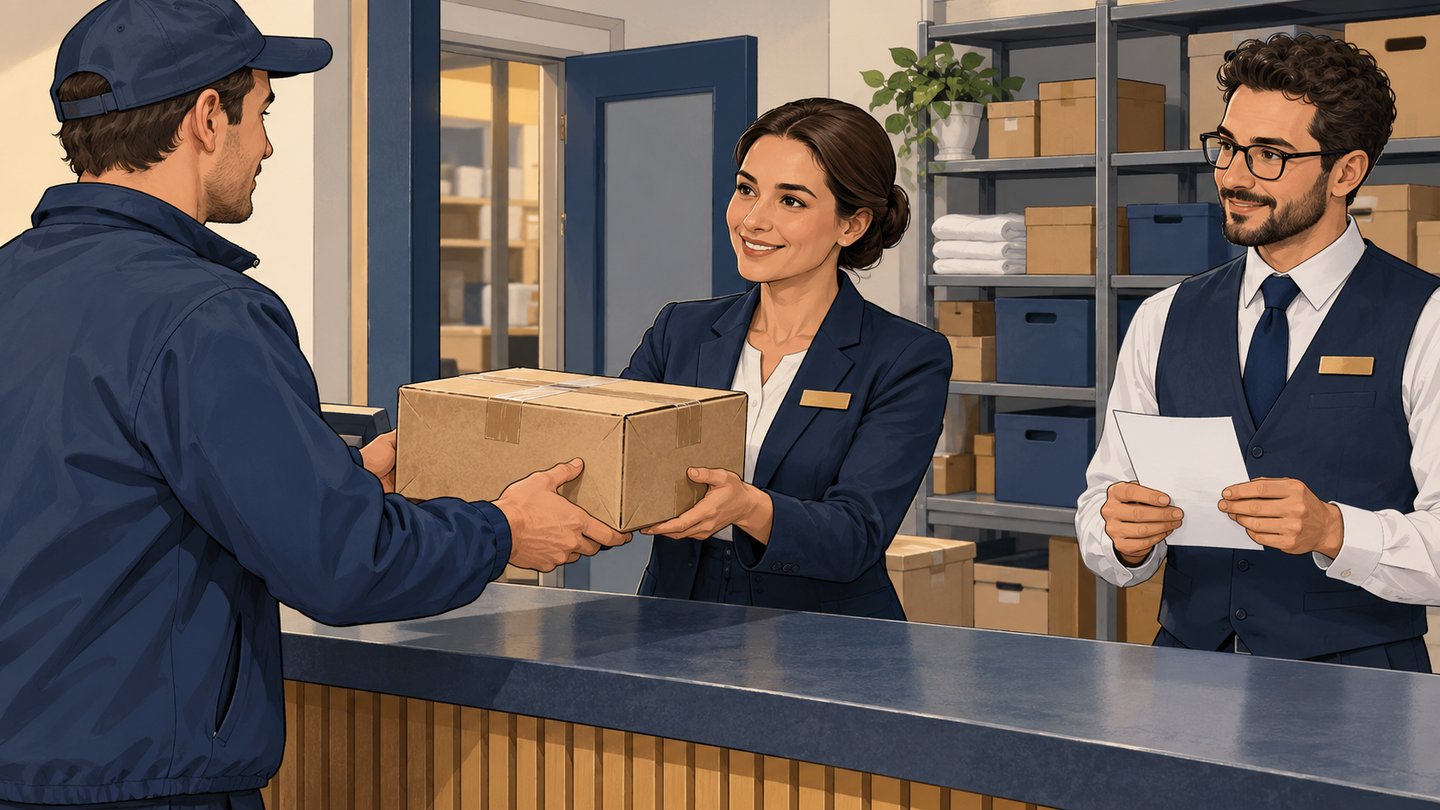
A collection booking can be canceled, missed or completed for only some of the parcels waiting at a hotel. The handoff record needs to describe what actually left, not what the team expected the carrier to take.
This guide follows the lost-property return coordination guide for approved ordinary lost-property returns. It distinguishes three records: the planned collection, the observed release and the carrier’s subsequent tracking information. Keeping them separate makes a delayed update easier to investigate.

Prepare a handoff list tied to physical parcels
List the parcels expected to leave in this collection and the references needed to distinguish them. Keep that list limited to the return operation. It should not expose a guest roster, reservation details or unrelated lost-property claims.
Before release, confirm that each parcel is ready under the current instruction and has not been paused for an address change. A box left in the pickup area yesterday may no longer be authorized to go today. The address-change guide explains how to supersede an earlier instruction.

At collection, confirm the actual boundary of the handoff
Use the property’s normal process to confirm the arriving collector and expected carrier or provider. Compare the parcels presented with those actually accepted. If the provider refuses one parcel, that item remains a separate unresolved case even when the rest of the collection succeeds.
- Which parcel references left hotel control?
- Who released them, and when?
- Which carrier or approved provider accepted them?
- What receipt or acceptance information was made available?
- Which prepared parcels remained, and why?
Record the observation promptly in the approved record. Do not manufacture a signature or say that an employee witnessed the exchange when they only heard about it later.
Keep tracking information in its own evidentiary lane
UPS defines Label Created as receipt of shipment details and billing information, while later statuses describe possession and movement. A label reference alone therefore should not close the hotel’s physical handoff step.
The reverse is also important: an employee’s documented release and a delayed tracking update can coexist. Preserve both facts. Do not rewrite the observation to match the website, and do not invent an explanation for the missing update. Ask the authorized shipping contact or carrier to investigate through its normal process.
If collection does not happen
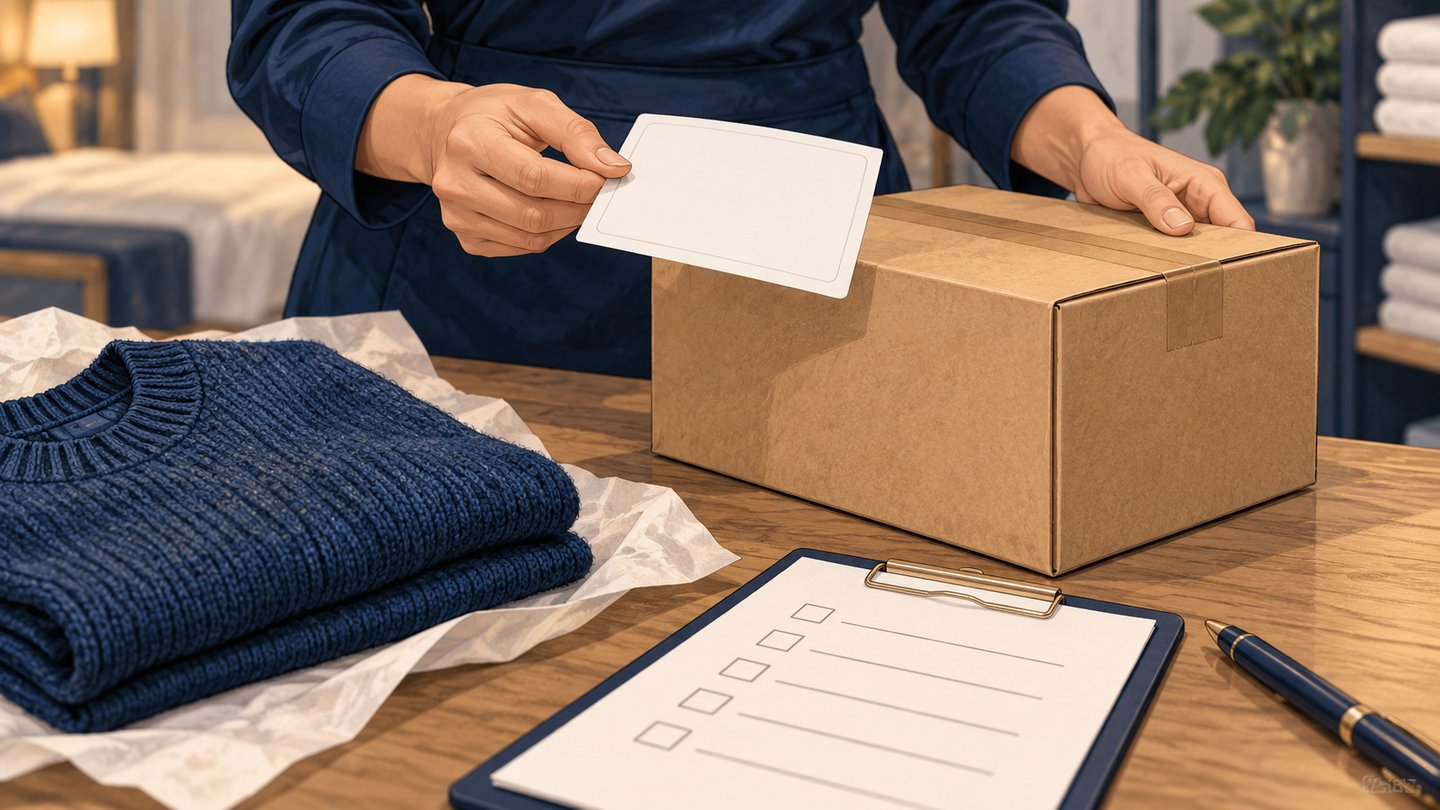
Check the actual staging position and confirm that another colleague did not release the parcel. Once reconciled, record “not collected” and retain the current storage location. Assign a specific next action, such as contacting the agreed shipping coordinator or confirming a replacement collection arrangement.
Tell the guest what is known: “The parcel remains at the hotel; the arranged collection did not occur.” Avoid “it should be on the way” when no one can establish a release. Do not send it through a different provider or charge a new service merely to close the task without the required approval.

If only part of the collection succeeds
A fictional hotel has three return parcels ready. The carrier accepts two and declines the third for a preparation issue. Staff record the two actual releases with their individual references and leave the third in the unresolved queue, with the reason and responsible person identified.
The guest associated with the third parcel receives a preparation update, not the dispatch message sent for the other two. Use the label review and packing check to resolve the specific issue. A successful batch count does not substitute for item-level outcomes.
Close the hotel’s release step without overstating delivery
Handoff completes one operational stage. It does not prove that the intended recipient received the belongings or that the journey had no exception. Record later carrier updates with their source and time. A guest’s report of a delivery problem deserves the relevant review even if a tracking page shows a completed event.
Set a proportionate review point for cases with an unresolved acceptance or tracking discrepancy. The property should define who owns that follow-up, rather than assuming the next shift will notice it. If the parcel returns physically, use the undeliverable-return process to receive it back without erasing the first attempt.
Published October 23, 2026. Original operational recommendations for U.S. hotel teams; primary sources checked October 23, 2026. Follow current property policies and provider requirements. No carrier integration, legal compliance or delivery guarantee is implied.