
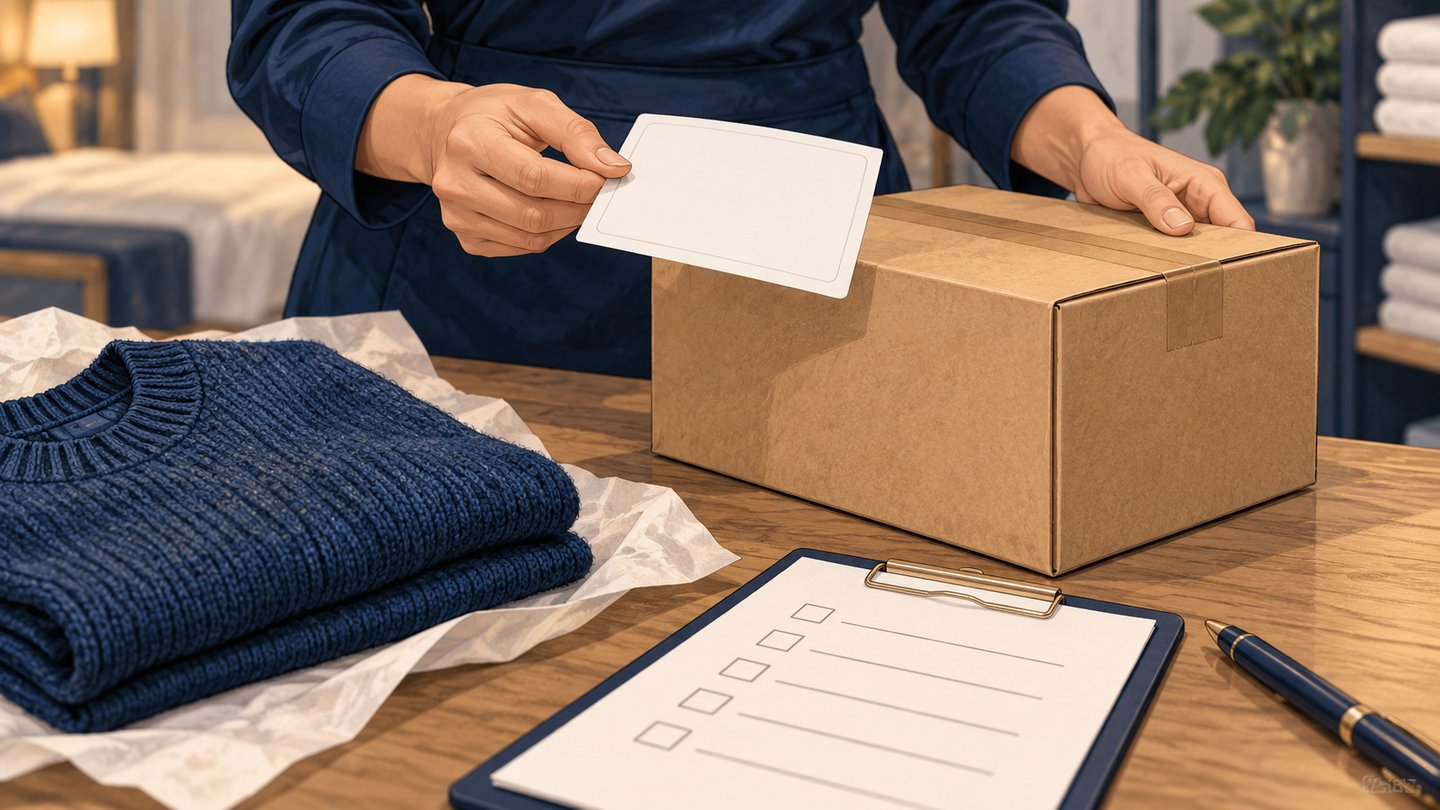
A guest-supplied prepaid label can make a return easier to arrange, but it can also arrive before the hotel knows the parcel’s final size, contents or destination. Printing it immediately can turn an unresolved proposal into something that looks ready to dispatch.
This review is for ordinary belongings in an approved domestic lost-property return. It is part of the lost-property return coordination guide, not a declaration that postage is valid or that a specific item is accepted for transport.

Identify what the guest actually supplied
A printable shipping label, a receipt, a QR code and a collection confirmation may have different purposes. Do not treat all attachments as equivalent. Ask the guest or provider to clarify the intended process when necessary. A code designed for a particular drop-off service may not be a label the hotel can print and use at a routine pickup.
Follow the hotel’s normal handling process for email attachments and links. Never supply account passwords or payment credentials to an unfamiliar page simply because a message says the label must be activated. A label problem belongs with the approved shipping contact, not an improvised account login.

Compare the label with the current return instruction
- Does the recipient match the currently approved return?
- Does the destination match the latest confirmed address, including applicable unit information?
- Is the origin or return address the arrangement the hotel has approved?
- Does the carrier and proposed service match the agreed method?
- Can the label be connected to this item and this parcel without relying on memory?
- Has a later message replaced the instruction used to generate it?
Keep full address details in the authorized record. A shift summary can say “replacement label needed after confirmed destination change” without reproducing them. Use the address-change checklist where the instruction itself is unresolved.
Check the parcel assumptions before treating the label as usable
Confirm who is responsible for supplying accurate package information to the carrier. If the guest generated the label before the hotel packed the item, the stated parcel details may not describe the final box. Have the responsible provider or shipper resolve a discrepancy rather than guessing that a small difference does not matter.
Do not combine another found belonging into the box after the label review without reopening the preparation check. A second object can change contents, packaging needs and parcel measurements. A paid label is not a substitute for the actual carrier’s contents and service requirements. Consult the USPS restrictions overview when relevant and refer special or unknown contents to qualified personnel.

Connect one active label with one dispatch attempt
Assign the label reference to the prepared parcel in the approved record. If the guest sends a replacement, mark the earlier preparation instruction as superseded and remove obsolete working copies from the packing area. Do not leave two competing labels beside one box.
When more than one parcel is involved, make the mapping explicit. The correct number of labels does not prove the correct label is on each box. Verify each physical package against its own contents and reference before sealing or handing it over. The contents check addresses that final item-to-parcel boundary.

Arrange the handoff separately
Confirm whether the guest has arranged collection, the hotel will use an approved carrier handoff, or a qualified shipping provider will collect and prepare the item. Do not assume paying postage schedules a pickup. Identify the expected carrier, location, contact and what the hotel must have ready.
UPS’s label guidance distinguishes label creation and reprinting. The hotel still needs a real dispatch arrangement. Record that arrangement in plain language and use the carrier-handoff check when collection occurs.
Use a precise request for correction
A useful message says: “The label names the original destination, but we have your confirmed request for a different address. The parcel remains here. Please provide the corrected label through our agreed return process.” It identifies the mismatch and the actual stage without promising a dispatch date.
For a fictional paperback-and-sweater return, the guest sends two labels but later requests one combined parcel. The team does not choose a label arbitrarily. It confirms the final preparation and asks the responsible shipper to provide the applicable label. The rejected alternatives remain identified as superseded, not as two parcels supposedly awaiting collection.
Published October 23, 2026. Original operational recommendations for U.S. hotel teams; primary sources checked October 23, 2026. Follow current property policies and provider requirements. No carrier integration, legal compliance or delivery guarantee is implied.