

Clear the room without losing control of the parcels
The renovation team needs the package room on Monday. A nearby meeting room is available, shelving can be moved, and someone has printed a sign. Those preparations still leave an important question: at what point does each parcel become the responsibility of the temporary operation?
This guide covers a planned, on-property move of ordinary parcels while a package room is renovated. It assumes the property keeps its existing package-record process. Emergency evacuation, hazardous or suspicious items, regulated deliveries, offsite warehousing and formal postal address changes need separate procedures. Do not use a renovation checklist to decide how to respond to an immediate danger.
The practical outcome is a room that can be handed to the project team without leaving parcels, unresolved custody or active pickup instructions behind. The sequence below is an original operational planning method, not a regulatory checklist or a promise of software automation.
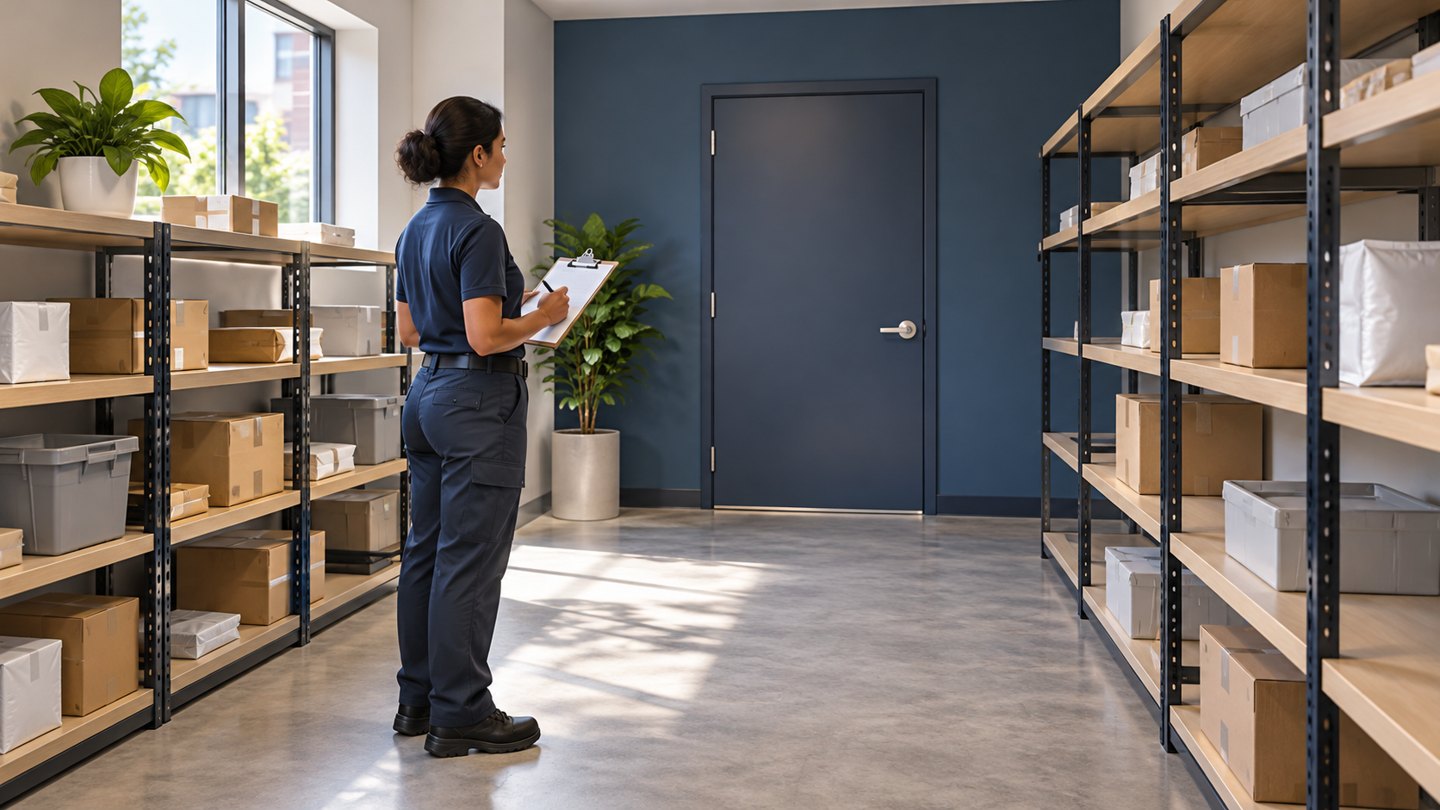
Choose a move boundary the operation can actually hold
Start with the physical constraint: which space becomes unavailable, when access changes and whether any approved portion can remain in service. A paint project affecting one wall may permit staged work. A complete room closure may require all parcels, records and operating equipment to leave before contractors enter.
Ask the project lead to distinguish a target date from a confirmed handover condition. Record who can approve a delay or a smaller work area if the temporary operation is not ready. “Everything must move by noon” is incomplete when no one has authority to resolve an unavailable destination.
- Move scope: the rooms, shelves and ordinary parcel categories included.
- Construction boundary: the agreed point after which package staff should not enter the old room.
- Service boundary: where new deliveries and resident pickups will be handled.
- Decision owner: who approves the start, a pause and the final room handover.
- Return condition: who will accept the renovated room for operations, separately from construction completion.
Accept the destination before dispatching the first batch
Walk the proposed temporary space with the people responsible for facilities and package service. Confirm authorized use, usable storage, staff access, a workable retrieval route and separation from renovation activity. Check the actual arrangements for the intended operating hours, not only the conditions during a daytime tour.
Use the temporary-room readiness and handover checklist to record who has accepted the space and what remains unresolved. A room reservation does not establish that equipment, access and receiving staff are ready.
OSHA’s materials-handling standard addresses clear passageways, safe handling clearances and stable storage. Have the responsible facilities or safety lead assess the proposed arrangement; this article does not determine a site’s compliance or prescribe aisle dimensions.

Separate the moving team from the service commitment
Write down the work that continues while parcels move: accepting permitted deliveries, answering residents, checking pickup authorization and retrieving parcels from whichever room currently holds them. Then assign those responsibilities without counting one person as simultaneously available at two doors.
If staffing cannot support both movement and service, arrange a clearly communicated service window or a narrower move stage. Do not promise uninterrupted pickup simply because the desk remains open. The live-service plan for a room relocation explains how to handle a request for an item already committed to a movement batch.
Keep the existing intake and pickup rules. A location change does not create permission to release items to a different person, accept excluded deliveries or bypass unresolved recipient checks.

Move identified batches, not anonymous cartloads
Choose a batch that the team can dispatch, accompany and receive without leaving its custody unclear. Size it around the route, handling needs and receiving capacity, rather than an attractive round number. Record the individual item references, departure point, responsible handler and intended receiver.
At the destination, confirm which items arrived and where they were placed. Do not mark a parcel collected because it left the original room, or create a new delivery merely because it reached temporary storage. The batch movement and custody receipt guide provides a compact record for this distinct internal event.
Retain the established location vocabulary where it remains useful. The existing location-naming guide covers labels and temporary zones. This move plan adds responsibility for the journey and acceptance at the other end.
A fictional move with a deliberate pause
At fictional Cedar Court, staff plan to move 46 ordinary parcels from the ground-floor room to an approved temporary room before flooring work begins. Intake remains at the staffed reception desk. A receiver is stationed at the destination, while a separate colleague handles pickup requests.
The first batch contains 12 identified parcels. All 12 are checked into their intended temporary positions. Before the next dispatch, the project lead reports that equipment now occupies the agreed corridor. The move coordinator pauses further departures and asks facilities to resolve the route. The remaining 34 parcels stay under the original room’s control.
Staff do not infer that the first successful trip makes later trips acceptable. Construction handover is delayed until an approved route is restored, the remaining batches are received and the old room is checked. These numbers illustrate the decision sequence; they are not recommended batch sizes or a customer case study.
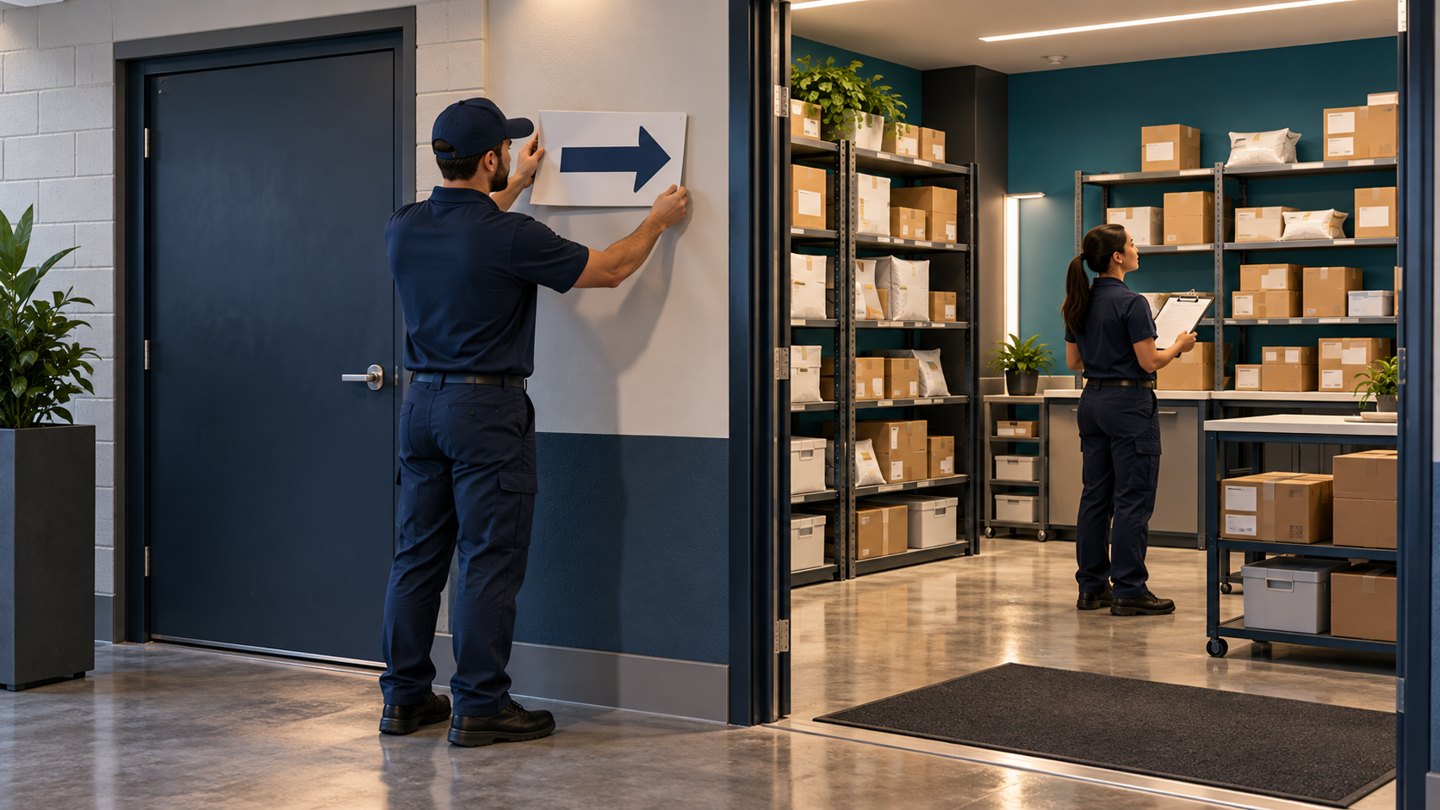
Give people directions to service, not to stored inventory
Prepare notices for residents, carrier arrivals and covering staff. State the effective time, staffed service point, available hours and help contact. Keep internal storage details and access arrangements out of public signs. Test the route from the entrance someone actually uses.
The temporary pickup wayfinding guide separates public directions from staff-only instructions and provides notice patterns. Retain a correction method if a date changes, so a printed sign and a resident message do not send people to different places.
Require a clear handover and a planned return
Before releasing the original room, confirm that every dispatched batch has a recorded outcome, retained exceptions have an approved custodian, operating records and devices have been removed, and no active service instruction still directs people into the work area. Record who accepted the handover and when.
Use the reopening and temporary-storage closeout plan for the return journey. Construction completion, package-service reopening and retirement of the temporary room are separate decisions. TrackNest supports package tracking and AI label scanning; ask how your approved relocation notes and location updates fit the supported workflow, rather than assuming a dedicated move-management feature.