
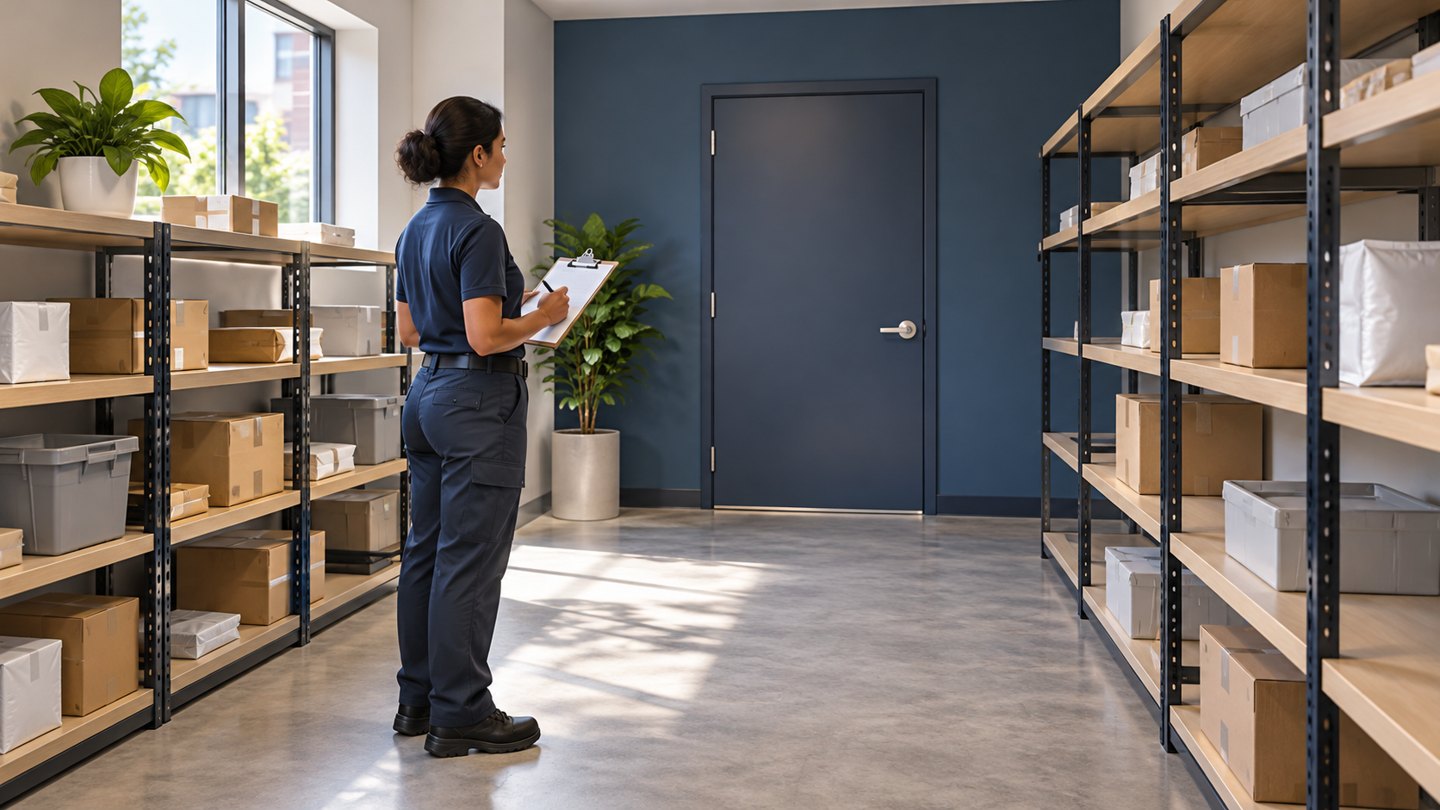
The last box moving back is not the final step
When renovation ends, returning parcels can feel like reversing the original move. The circumstances have changed, though. Some of the original parcels have been collected, new ones have arrived, the room may have a different layout and staff may now be accustomed to temporary directions.
Closeout needs to account for the inventory currently held, confirm that the reopened service works and remove temporary arrangements that would otherwise keep attracting parcels or visitors. This guide concerns ordinary parcels after planned, on-property renovation. “Temporary addresses” here means internal storage references, not postal addresses or a USPS change-of-address process.
Use the relocation runbook for the full project. Emergency conditions, hazardous materials and specialist deliveries require separate procedures and are not resolved by the checks below.

Separate three approvals
1. The project releases the space
Ask the responsible project or facilities lead to confirm when the space may be used for the intended package operation and identify remaining work or restrictions. An appearance of completion is not a substitute for that confirmation. Do not ask desk staff to approve technical construction matters outside their role.
2. Operations accepts the room
Check the practical conditions used for temporary-room readiness: permitted access, usable storage, approved movement and retrieval routes, workstation readiness and staffing. Test the real setup after changes, rather than assuming the former arrangement still applies.
3. Service returns to the usual point
Choose when residents and carriers should follow the restored directions. That may be after the return batches are received, or during a carefully defined stage with continued retrieval from temporary storage. Confirm the actual service arrangement before announcing that the room has reopened.
OSHA’s materials-handling standard addresses stable storage and passageways free of hazardous obstructions. Refer questions about the changed shelving and route to the responsible facilities or safety personnel; the closeout record is not a compliance certificate.
Return the current inventory, not the old move list
Use the parcels actually held in temporary storage at the return boundary. Compare them with their current records and identify any items that need separate review. The original outward list is historical context, not a reliable instruction to return every item it names.
Choose where new deliveries will go during return movement and who controls that decision. If new arrivals still enter temporary storage, they need to be included in its final clearance. If they go directly to the reopened operation, keep them distinct from parcels arriving in internal return batches.
Use the batch dispatch-and-receipt method again. Preserve parcel identities and original receipt meaning. Record the physical return and new position without creating a second carrier arrival or changing an uncollected parcel to collected merely to remove it from the temporary queue.

Handle leftovers by reason
A final walk-through may find more than ordinary waiting parcels. Separate the next action according to what is present:
- Known parcel still held: identify its current record and move it through an approved return batch.
- Parcel with unclear identity or custody: keep it under the designated exception arrangement and assign a reviewer.
- Paperwork or device: return it to the approved custodian and remove it from shared-room surfaces.
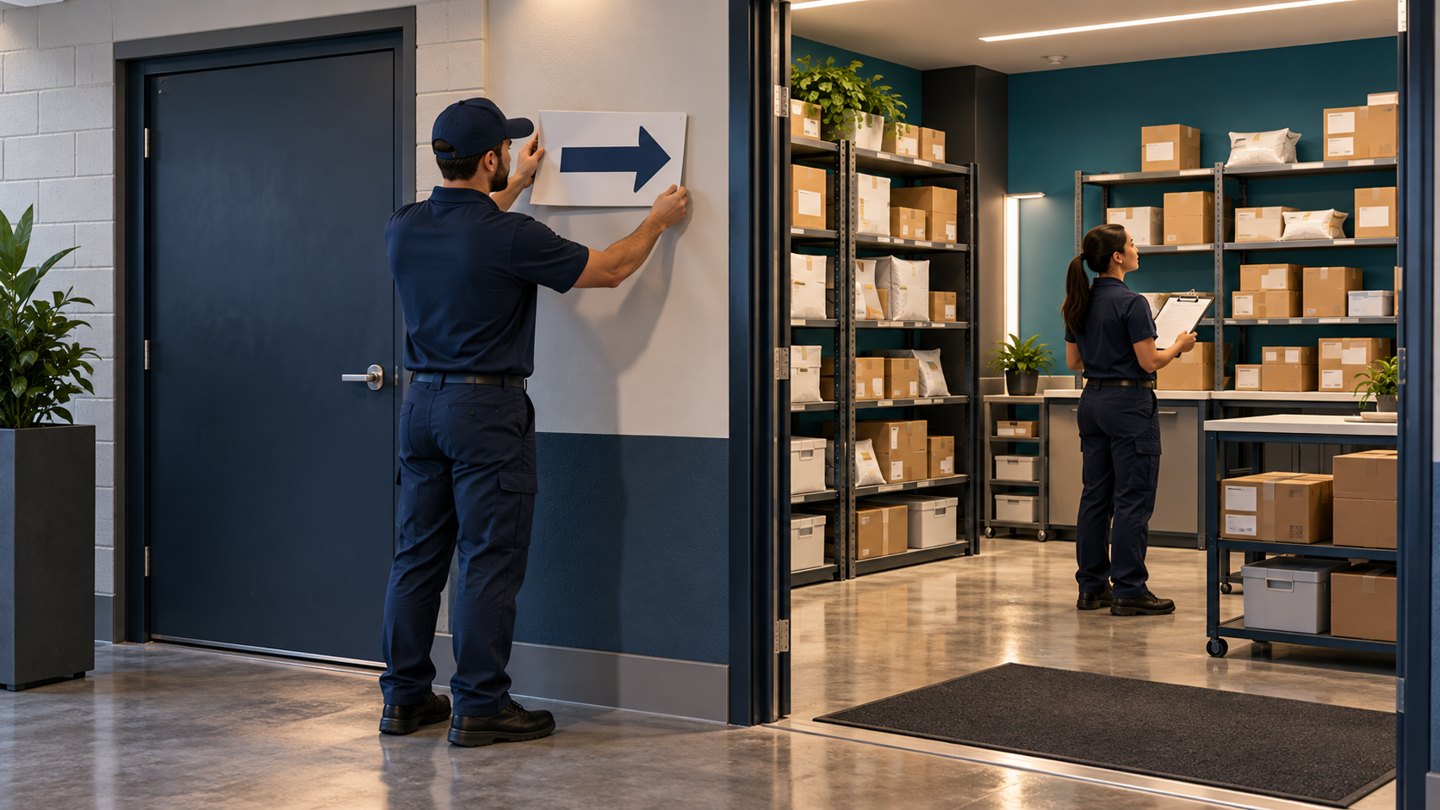
- Temporary label or sign: retire it from active use after the corresponding arrangement has ended.
- Unrelated property: ask the room owner to handle it through the appropriate process; do not silently add it to package inventory.
Do not mark the room empty because an unresolved parcel has been pushed into an adjoining cupboard. If an exception must remain temporarily, record its exact approved location, custodian and effect on the room handback. A room can be partly released only when that limited arrangement is explicitly accepted.

Retire internal locations without rewriting history
Confirm that no active parcel record still directs retrieval to a location being closed. Check current exceptions and prepared movement lists as well as the routine waiting queue. A zero count on one screen does not establish that every use of the temporary reference has ended.
Then follow the supported process for making the location unavailable for new placement. If software does not offer a dedicated retirement function, use an approved operational instruction and ask the provider how to avoid new assignments. Do not claim that TrackNest automatically disables temporary locations or prevents staff from selecting them.
Keep necessary historical meaning accessible under the organization’s retention rules. The existing location-naming article covers code changes and cross-references. Closeout adds a physical condition: the retired reference must no longer describe an active holding position.
A fictional return with a different inventory
Fictional Willow Square moved 40 ordinary parcels into temporary storage at the start of renovation. By reopening day, 27 of those parcels have been collected and 18 later arrivals remain. With no other custody changes, the temporary operation now holds 31 parcels, not the original 40.
Staff prepare return batches for those 31 current items. During the final room check, they find a working sheet that still lists the original 40. They remove it from active use and preserve it only as required by the approved record process. It does not become a reason to search for already collected parcels.
One current parcel has an unresolved recipient question. It moves to the reopened room’s approved exception position with its existing question and assigned reviewer intact. The renovation closeout does not resolve the recipient issue, but it does establish where the parcel is now held.
Use a closure record that another shift can test
Record the following completion evidence, with an owner for any remaining condition:
- The reopened space was released for use and accepted for the intended operation.
- Every return batch has an explained outcome and current item locations.
- The temporary room and its approved associated holding positions were checked.
- No active placement instruction or unresolved retrieval points to a retired location.
- Public and staff directions now match the operating service points.
- The authorized administrator has reviewed access granted specifically for temporary use.
- Equipment, working records and keys have been handed to the appropriate custodians.
- The temporary space owner has accepted the room back, including any explicitly agreed limitation.
Verify the restored service before closing the move
Ask a colleague who did not arrange the returned shelves to retrieve a specified parcel from its current record. Check the public approach and the former temporary destination using the notice distribution list. Resolve a wrong arrow, unavailable position or unclear exception before declaring the temporary operation retired.
Review the first normal operating handoff for move-related confusion, using the service coordination plan if any inventory remains split. Close the relocation when those specific loose ends are resolved. A later generic inventory audit can remain part of ordinary operations; it should not substitute for knowing what happened to this move.