
THE TRACKNEST BLOG
Better days
at the front desk.
Practical ideas for package management, smoother handoffs, and the people who keep buildings moving.
Ideas you can put to work.
Page 7 of 16

The Unlabeled Lobby Drop Playbook: A Strict Triage Ladder for Packages With No Unit, No Name Match, or Only a Phone Number
When a carrier leaves a package with no unit number, no matching name, or only a phone number, staff need a repeatable, privacy-safe decision tree. This playbook lays out a strict triage ladder—what you may ver
Read article ↗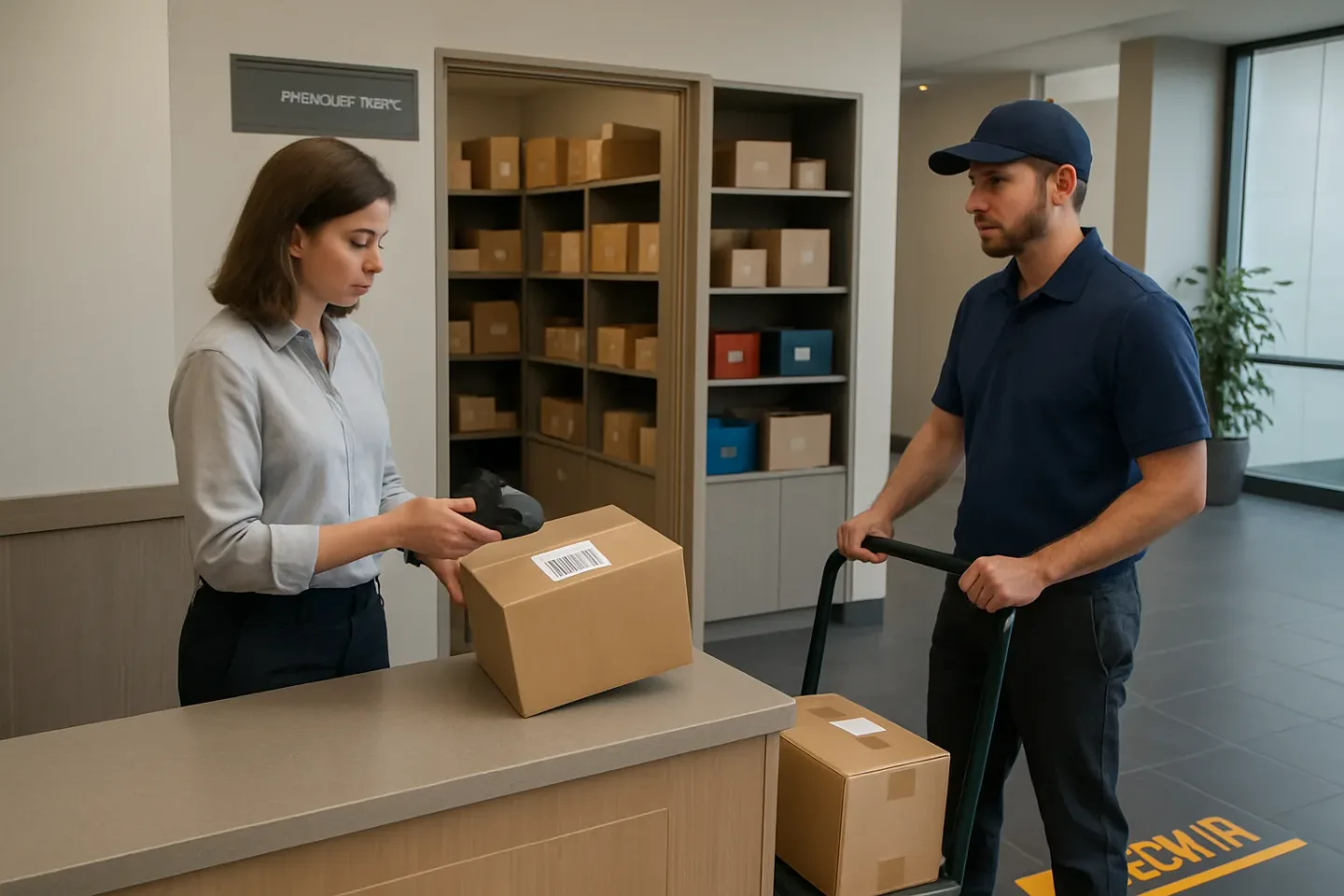
Package Room Staffing Math: Convert Daily Volume Into Minutes, Headcount, and Service Targets
A simple, repeatable package room staffing model: measure three cycle times in one week, convert daily volume into minutes and headcount, and set service targets you can defend in budgeting conversations.
Read article ↗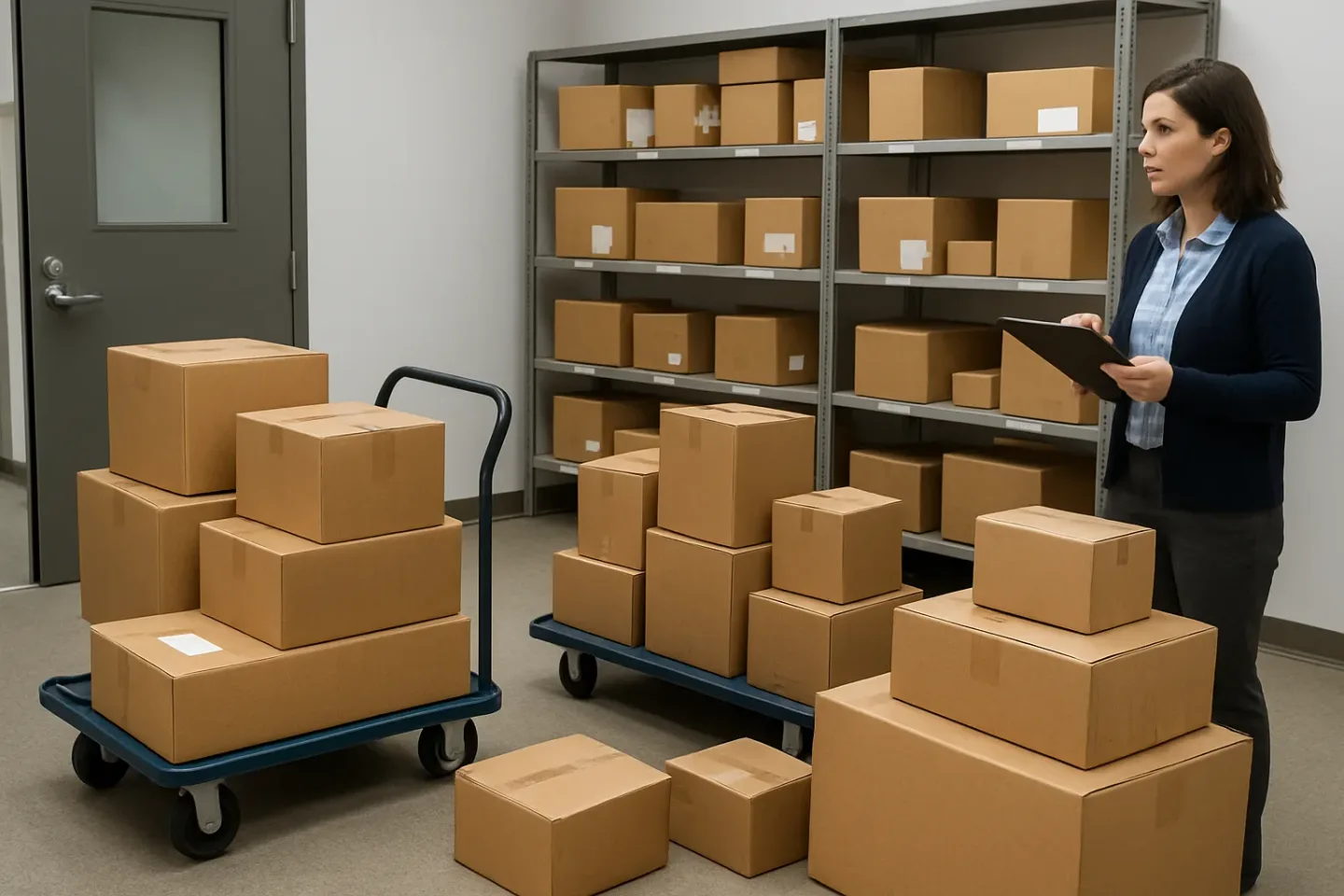
Multi-Carrier Label Chaos: A Future-Proof Package Room Location Naming Convention That Survives Turnover, Renovations, and Overflow
Stop ad hoc shelf renaming from breaking retrieval. Use a Zone–Aisle–Bay–Level schema plus overflow and renumbering rules that keep mailroom location codes consistent through turnover and layout changes.
Read article ↗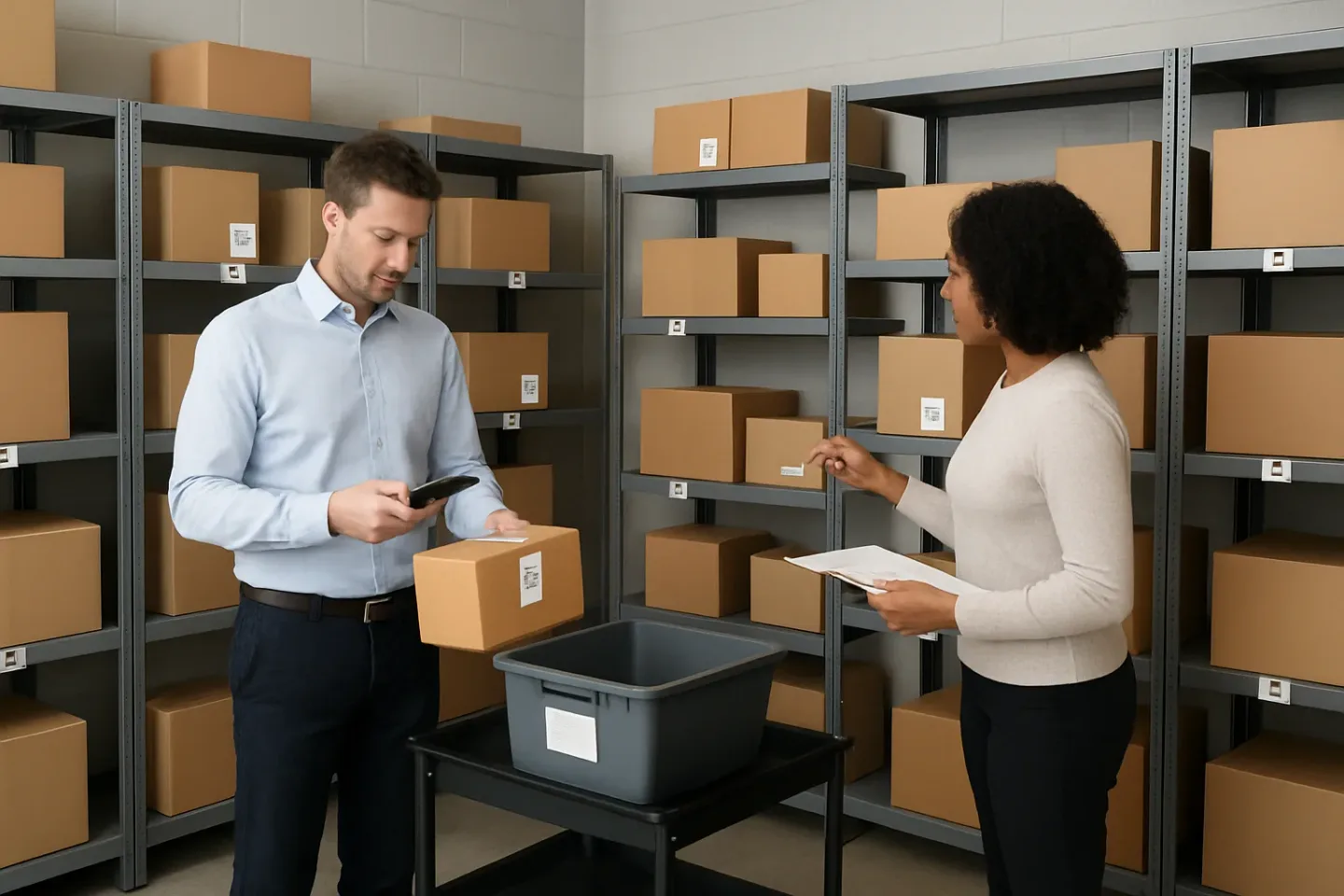
‘Shadow Inventory’ in the Mailroom: A Weekly Package Room Reconciliation Routine That Finds Misplaced Deliveries
A lightweight, weekly package room reconciliation routine that treats the mailroom like a mini-warehouse: quick zone cycle counts plus exception tags to uncover shadow inventory and prevent missing-package inci
Read article ↗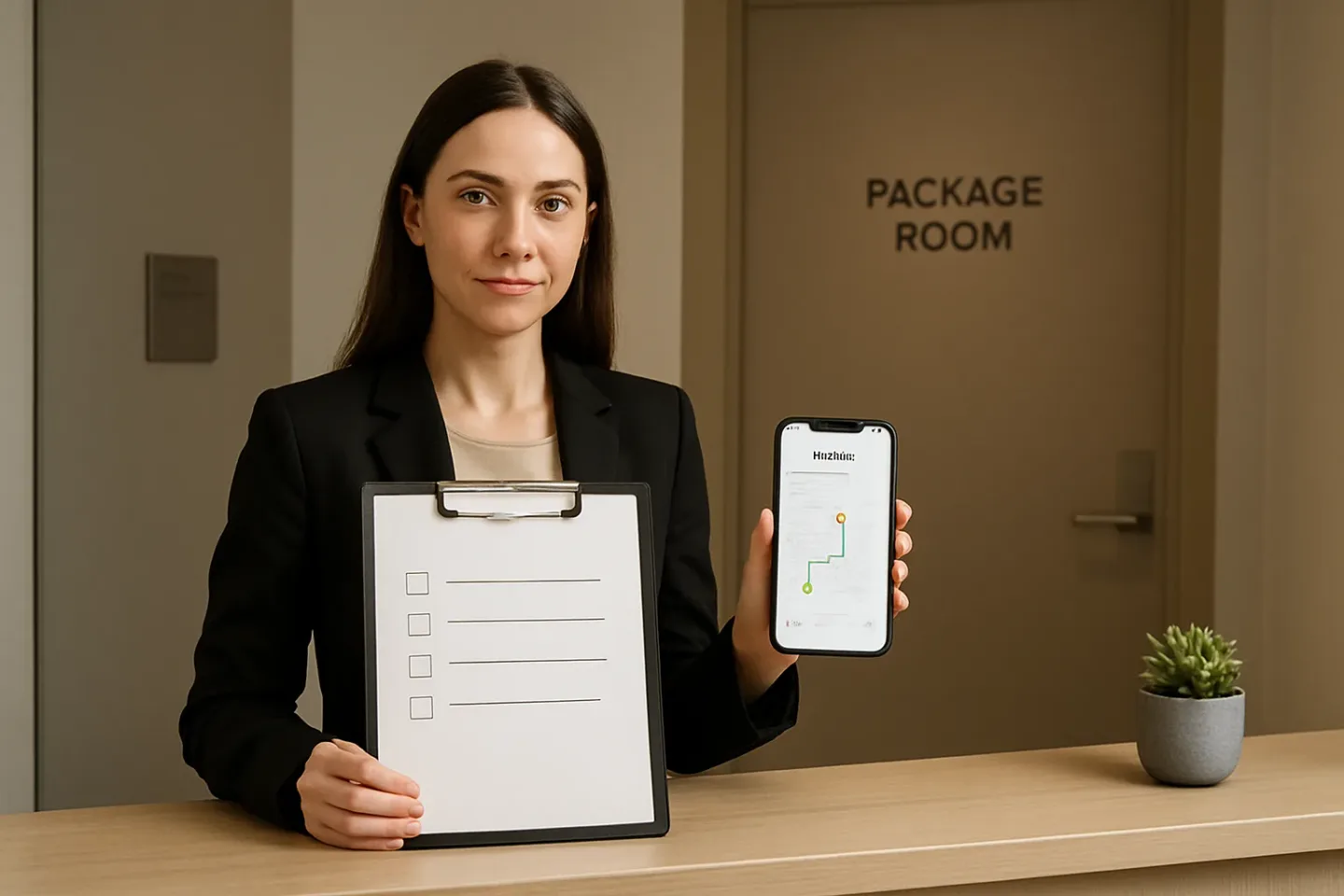
What to Do When a Resident ‘Pre-Claims’ a Missing Package: A 10-Minute Intake Interview That Prevents Days of Back-and-Forth
A step-by-step, 10-minute intake script and one-page form to capture the facts (scan, address, delivery photo, door/time, name/unit variants) before emotions take over—improving first-contact resolution and red
Read article ↗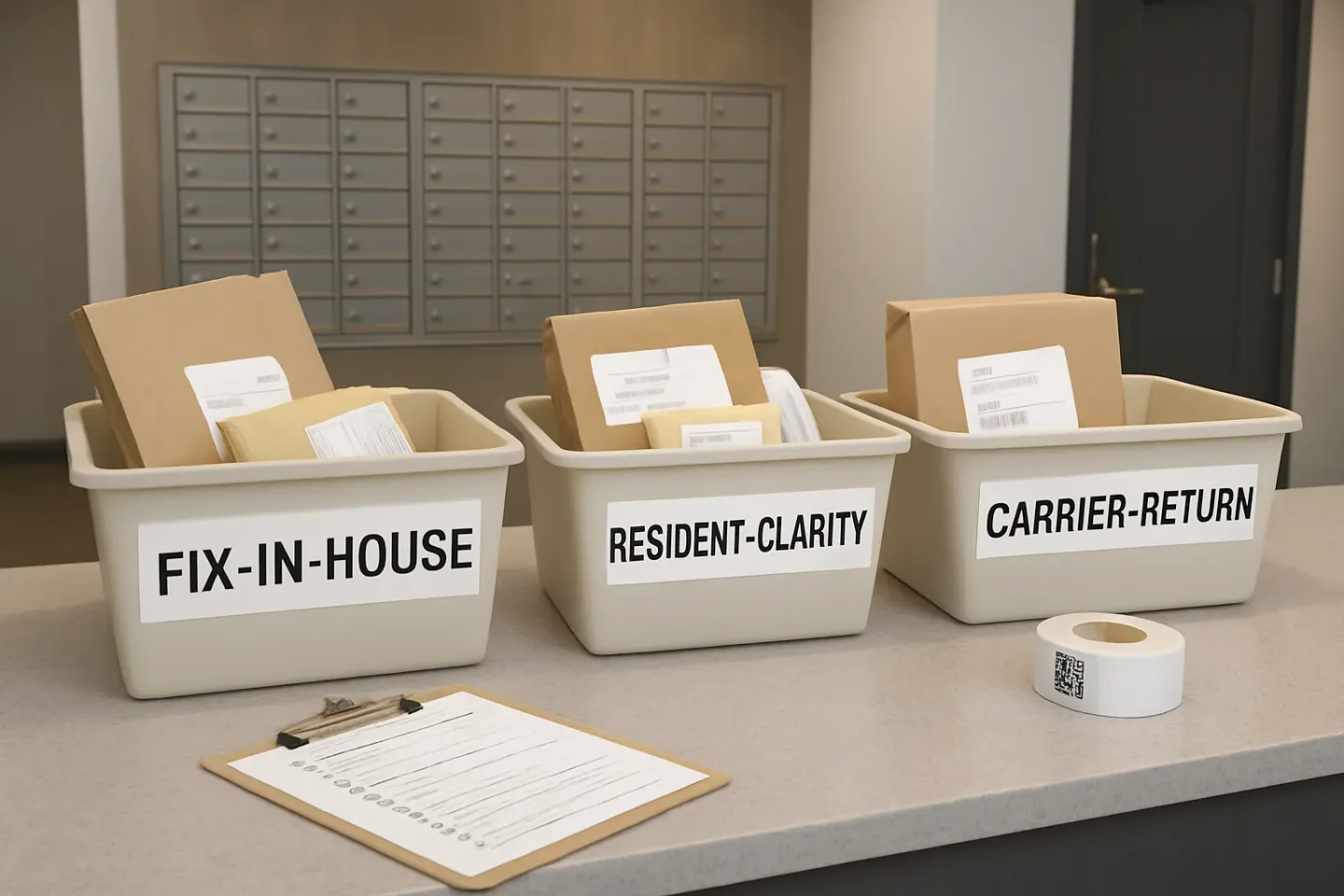
Dead-Letter Packages in Apartments: A 3-Label Triage SOP for Missing Unit Numbers, Nicknames, and Conflicting Addresses
A fast, defensible front desk SOP that routes every bad label into one of three buckets—Fix-in-house, Resident-clarify, or Carrier-return—using clear time limits, scripts, and logging so dead-letter packages do
Read article ↗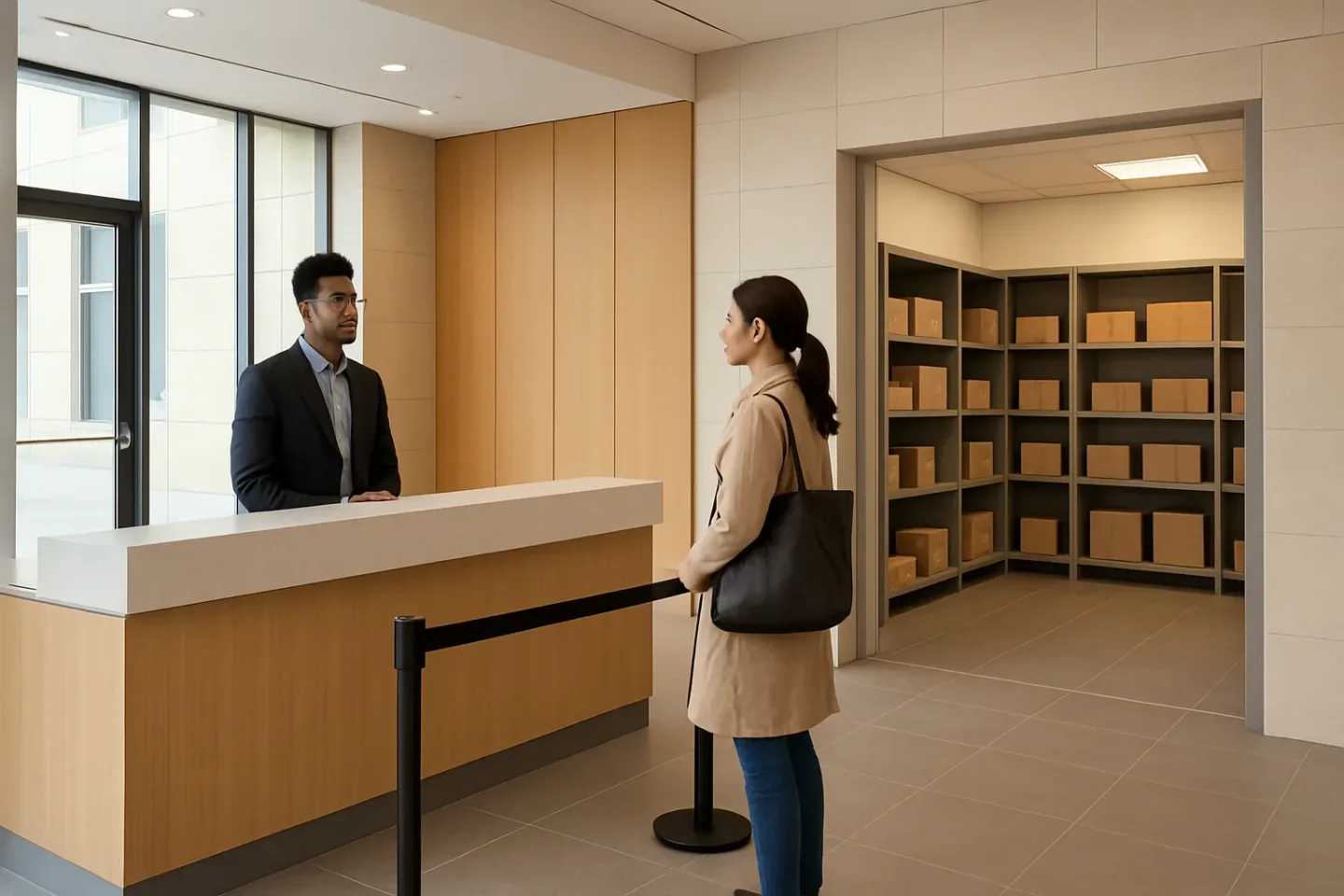
Package Room Fraud & “False Pickup” Prevention: Low-Friction Controls That Stop Opportunistic Theft
Opportunistic package room theft often looks like a normal pickup. This guide maps common fraud patterns—”picking up for my roommate,” screenshot confirmations, badge tailgating, and social engineering—to a sim
Read article ↗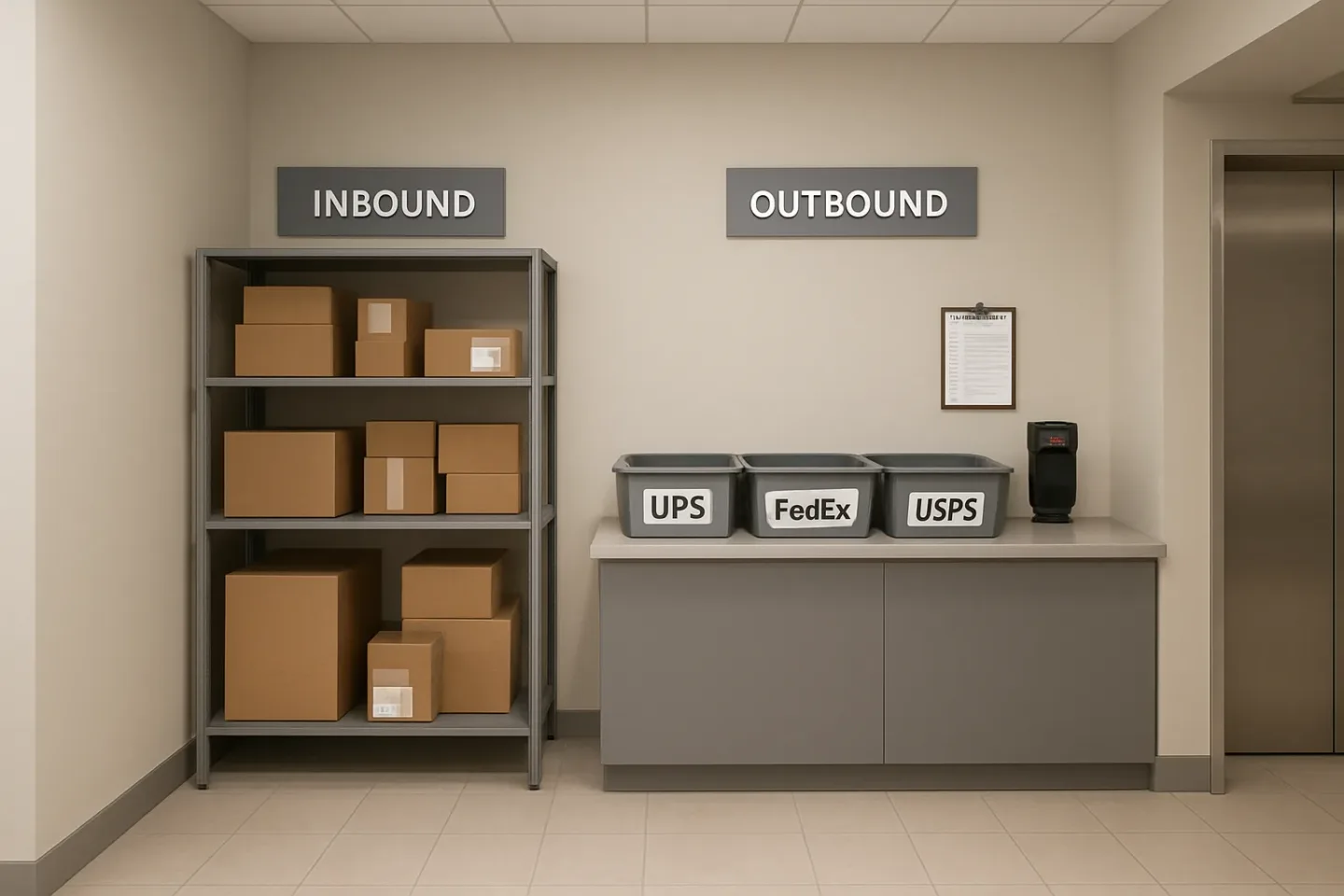
Returns & Outbound Packages in Apartments: A Resident-Friendly Workflow That Prevents Mix-Ups, Carrier Refusals, and Liability
Build a clean, auditable outbound package workflow for apartments by separating returns from inbound inventory and enforcing label verification, carrier match, pickup windows, and documented handoff—reducing mi
Read article ↗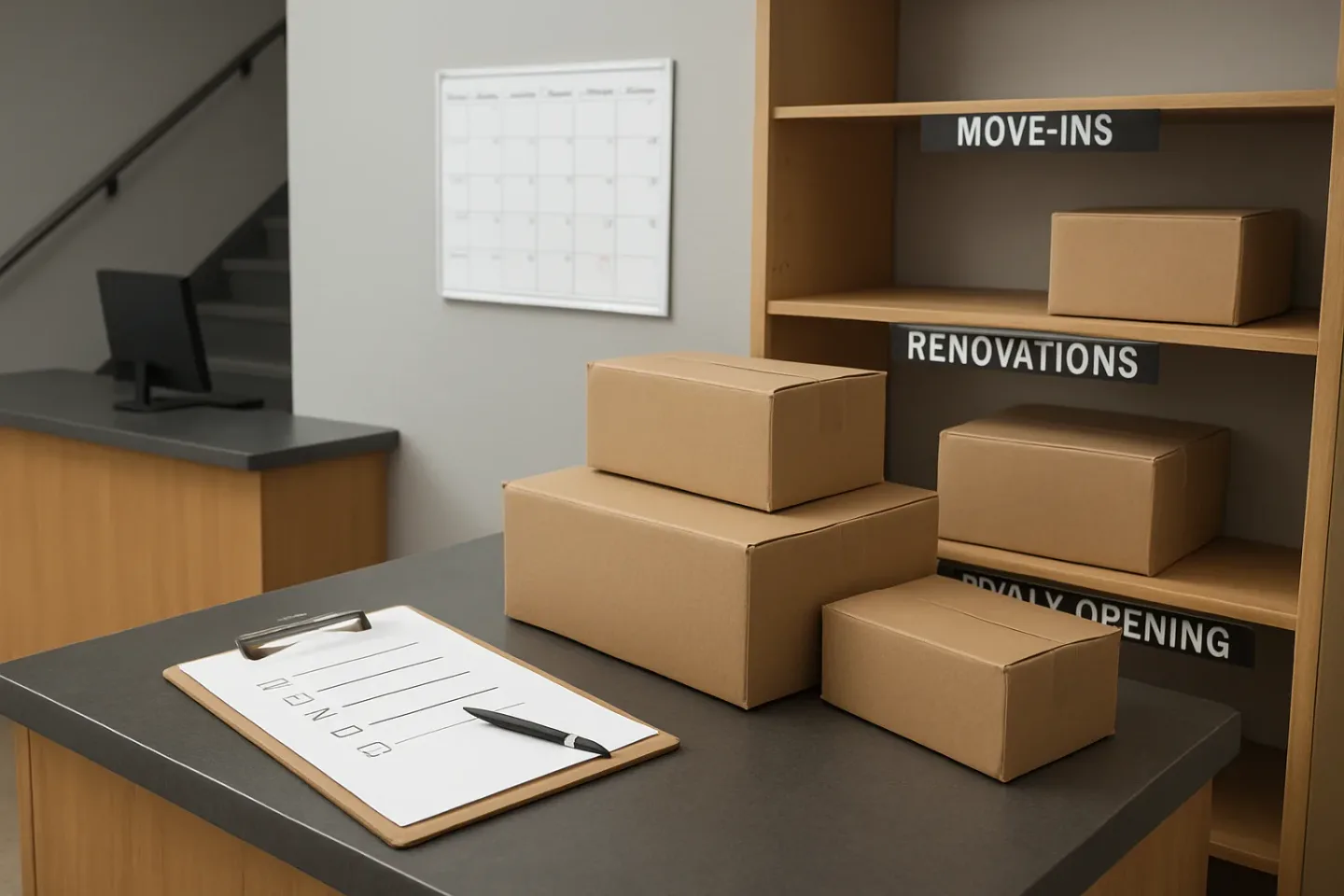
How to Forecast Package Volume by Property Events (Not Just Seasonality): Move-Ins, Renovations, and Amenity Opens
Seasonality helps, but building events drive the biggest surprises. This guide shows an event-based, no-data-science worksheet to convert move-ins, renovations, amenity opens, elevator downtime, and package-roo
Read article ↗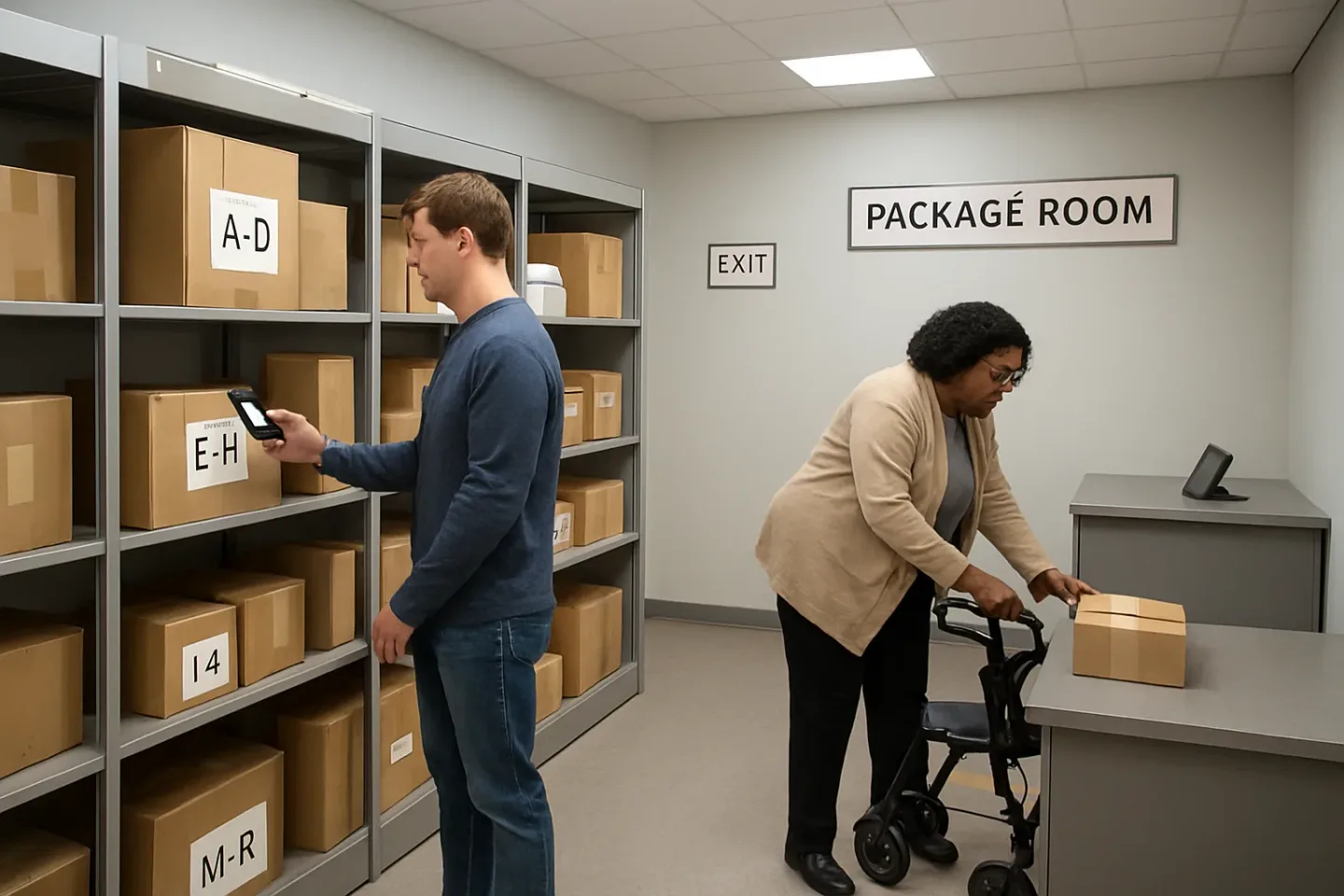
Accessibility-First Mailroom Operations: ADA Package Room Best Practices for Labels, Signage, and Retrieval Flow
A practical, operator-focused guide to ADA package room best practices—defining measurable standards for accessible signage, large-print shelf labels, contrast, reach ranges, lighting/glare control, and inclusi
Read article ↗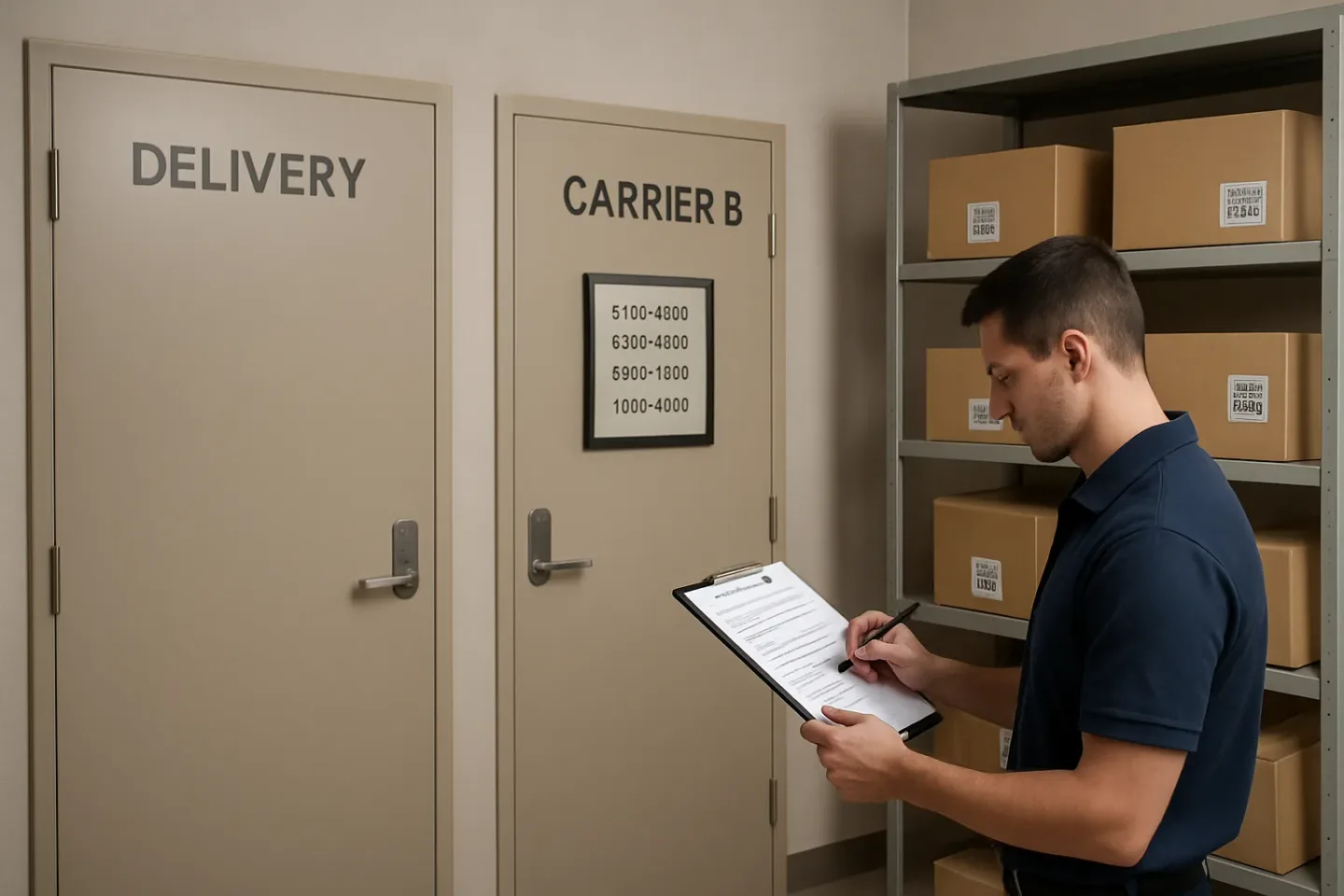
Carrier Arrival Smoothing for Apartment Buildings: Door Rules + Micro Time-Windows Without Contracts
A cooperative, low-friction way to reduce peak-time delivery chaos: define door rules by carrier, publish small arrival windows, use overflow triggers when volume spikes, and track two simple metrics to keep co
Read article ↗
Carrier Scorecards Without Politics: A 30-Day, Data-Light Way to Reduce Misdrops and Damages
A practical, data-light carrier performance scorecard for package rooms: three micro-metrics, a simple incident log, and a calm weekly review cadence that replaces anecdotes with trends and improves outcomes.
Read article ↗